
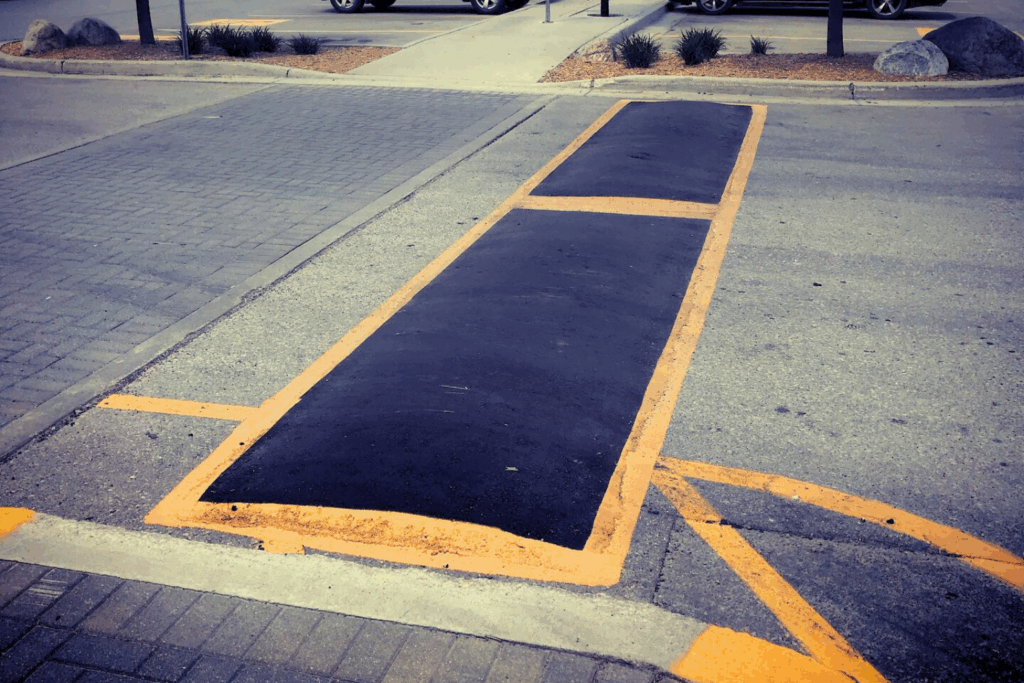
Parking lots, bustling with vehicle and pedestrian activity, present unique challenges for ensuring safety and traffic flow. Installing speed bumps in parking lots can help control vehicle speeds, reduce accidents, and enhance overall safety. However, careful consideration is necessary to ensure that speed bumps are installed effectively without compromising accessibility or causing undue inconvenience. At Superior Asphalt Paving we have discovered some essential factors to contemplate when installing speed bumps in parking lots to promote safety and efficiency.
1. Traffic Flow and Patterns:
Analyzing traffic flow and patterns within a parking lot is crucial for determining the strategic placement of speed bumps. Identify high-traffic areas, pedestrian crossings, and intersections where speeding poses the greatest risk to safety. Strategic placement can effectively slow vehicles while minimizing disruption to traffic flow.
2. Pedestrian Safety:
Prioritize pedestrian safety by installing speed bumps near pedestrian walkways, crosswalks, and gathering areas. Slow-moving vehicles reduce the risk of accidents and enhance the visibility of pedestrians, especially in busy parking lots with heavy foot traffic.
3. Accessibility Compliance:
Ensure that speed bumps comply with accessibility standards to accommodate individuals with disabilities, including those using mobility aids or wheelchairs. Maintain proper clearance and slope gradients to facilitate smooth passage without causing discomfort or hindrance to accessibility.
4. Design and Materials:
Choose appropriate speed bump designs and materials tailored to the specific requirements of parking lot environments. Options include rubber, plastic, or asphalt speed bumps, each offering varying degrees of durability, visibility, and installation flexibility. Select materials that withstand frequent vehicle traffic and adverse weather conditions while minimizing noise and vibration.
5. Visibility and Signage:
Enhance the visibility of speed bumps through clear signage, pavement markings, and reflective materials to alert drivers and pedestrians. Use standardized symbols and colors to convey the presence of speed bumps effectively, improving awareness and compliance among motorists.
6. Maintenance Considerations:
Implement a proactive maintenance plan to ensure the longevity and functionality of speed bumps in parking lots. Regular inspections, repairs, and repainting of pavement markings are essential to address wear and tear, maintain visibility, and preserve the effectiveness of speed bump installations over time.
Installing speed bumps in parking lots requires an approach that balances safety, accessibility, and traffic flow. By considering factors such as traffic patterns, pedestrian safety, accessibility compliance, design, visibility, and maintenance, parking lot owners and managers can implement effective speed management strategies to create safer and more efficient environments for all users. With careful planning, speed bumps can contribute to enhancing parking lot safety and promoting a positive experience for motorists and pedestrians alike.